Dr Tom Booth
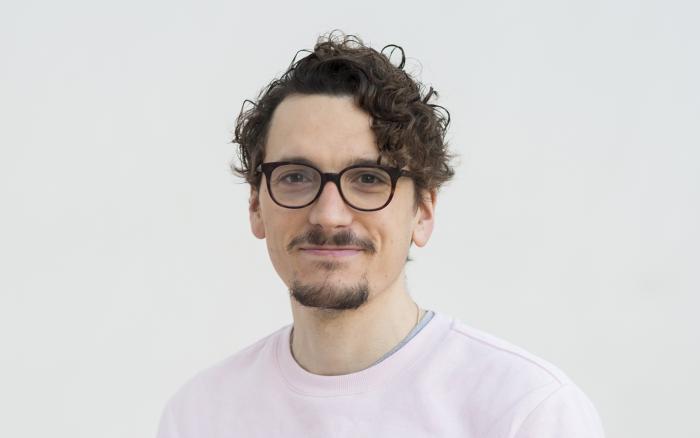
Tom opened his presentation with a brief resume of his personal history, before stating that he now works at the Skogland Ancient Genomics Laboratory at the Francis Crick Institute in London. Tom proceeded to give a brief explanation of the double helix of DNA, before stressing the importance of mitochondrial DNA, which is inherited from the mother and tracked through populations. Ancient DNA is not defined necessarily by the age of the sample, but by the amount of degradation of the sample, meaning that the researcher has to use ancient DNA methods to extract and sequence it.
Genetic Ancestry
The recent development of Next Generation Sequencing has led to ‘high throughput sequencing’ and plummeting costs, prompting a huge increase in the amount of research into ancient DNA. At this point Tom emphasised that genetic ancestry is not simple genealogy in the ancient past. It is the ancestors from whom you have inherited DNA. However, we have not inherited any DNA from most of our ancient genealogical ancestors. Nor is it possible to make any meaningful genealogical link between ancient and modern individuals. Genetic ancestry reflects the ‘average’ genealogical ancestors through time and all ‘average’ human ancestry converges in Africa c60,000 years ago.
Ancestry and Migration
All human ancestries are ‘mixed’. Genetic ancestry is always changing, sometimes quickly, sometimes slowly, but substantial genetic ancestry change over time indicates ‘migration’, related either to the introduction of new genetic ancestors or to the production of descendants, rather than large numbers of people moving.
Tom then went on to outline population movements across Europe during the Upper Palaeolithic and their effect on Britain. Due to the harsh environment in c16,000-c13,000 BC, only two British sites, Gough’s Cave in Cheddar Gorge and Kendrick’s Cave in North Wales have provided any research samples. They do not appear to be connected and results indicate an almost complete genetic ancestry turnover in less than 1,000 years.
There is genetic and archaeological evidence of further European migrations extending into Britain during the Mesolithic and Neolithic ages, with an almost 100% change in ancestry indicated by c4,000BC. Local sites providing examples of changes in burial practices during this period can be found at Black Hill Long Cairn, near Skipton and Pikestones Monument on Anglezarke Moor, Chorley. A DNA study of later Neolithic social networks suggests intricate interconnectivity between Britain and Ireland, but not Europe.
By the early Bronze Age c2500BC, migrations from the Black Sea area across Europe brought the Bell Beaker phenomenon to Britain, evidenced by changes in burial practices, beaker pottery and the development of metal working. Genetic studies indicate another huge ancestry replacement over about 400 years. Studies from Stonehenge and southern England show a very mixed population – a melting pot of people with ancestries from various parts of continental Europe and local Neolithic derived groups. This pattern intensifies by the late Bronze Age with Britain and Europe more culturally connected via extensive trade networks and increased mixing of populations. Despite this, the genetic ancestry of populations in areas away from the south remained relatively unchanged.
There is a paucity of excavated prehistoric human remains in NW England owing to: a patchier history of excavation, less development leading to archaeological discovery and acidic soils not being good for preservation. However, data from living individuals informs us that the north-west was affected by the same range of migrations as the rest of Britain.
Tom rounded off his presentation with details of sites in the north west that have provided samples for DNA testing. These include human remains from Heaning Wood, skulls dredged from Preston Dock and skeletons excavated from Levens Park Ring Cairn and Sizergh Fell Cairn.
The 40 members and guests gave Tom a deserved round of applause for his detailed exposition, delivered with huge enthusiasm for his subject.