The owner of the nurseries, John Foley, greeted ten members and guests at the entrance. He led us through the large glasshouse to the courtyard where, as a child, he planted his first ferns. Thus began a lifelong fascination with plants and horticulture that led to his being crowned ‘BBC Young Gardener of the Year’ in 2012 when leading the renaissance of Holden Clough Nurseries.
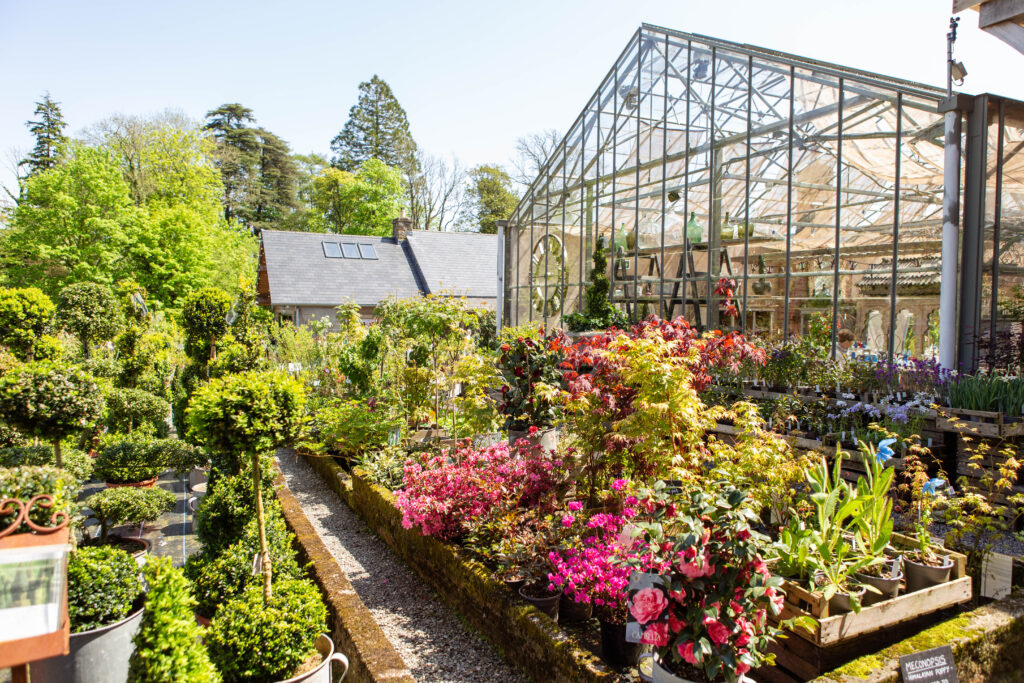
Photo: Holden Clough Nurseries
John explained that nurseries were formerly part of the garden of Holden House, hidden in the trees further up Holden Beck. In 1927, the kitchen garden was turned into a successful alpine nursery. When John’s parents bought the nursery in 1978, moving from a plant nursery in the south of England, they developed the range of plants grown on the site. Exhibiting at flower shows and plant fairs countrywide the Holden Clough name became well known. When John took over the business, parts of the site had become run down and overgrown; he recognised the need to diversify. This resulted in the building of a café that brought in much needed income. Gradually, John and his team brought derelict areas of the site into cultivation and gained much success, winning major awards at prestigious flower shows from 2013 to the present day. Standing on an area of reclaimed meadow, John outlined his philosophy that all the plants for sale in the Nursery are grown outdoors so that customers can be assured that they are hardy and will survive the vagaries of the Lancashire climate.
At this point, the heavens opened so we moved indoors to inspect the potting machine (to me, it looked like it had been designed for a Wallace & Gromit film). John than went on to explain that he was on a mission to slow down the pace of his life and encourage others, especially younger people, to do the same. To this end, he had adopted an analogue lifestyle, getting rid of his smart phone, tablet and computer. Now, he runs his life the old-fashioned way with pencil and paper. He designs bespoke gardens by visiting the sites, talking to clients and drawing designs, rather than relying on computer-generated images. He is also trying to encourage more participation in horticulture by setting up projects in garden plots and parks across Lancashire, where he and his team establish the plants and maintain them, with the help of local volunteers who are invited to attend at a regular, set time. He also holds sessions at the Nursery, where participants hand in their mobile phones on entry and spend two hours in practical gardening work – an attempt to persuade them of the value of being ‘in the real world’ rather than interacting with a screen.
The visit ended with a visit to the café, where all enjoyed a cup of tea or coffee served with largest fruit scone most had ever seen! Delicious.